Concrete Slab & Foundation Work
Solid foundations and slabs that support your structures for decades.
The Foundation of Every Structure
Your foundation is the most important part of any building. It carries the entire weight of the structure and transfers that load safely to the ground below. A well-built concrete slab or foundation prevents settling, cracking, and structural problems that cost thousands to repair. When you need foundation work, you need contractors who understand soil conditions, drainage, and proper construction techniques.
We specialize in concrete slab and foundation work for residential and commercial projects throughout Palm Harbor. Whether you are building a new home, adding a garage or shed, or replacing a damaged foundation, we bring the expertise and attention to detail your project demands. Foundation work is not something you want to trust to just anyone. It requires knowledge, experience, and a commitment to doing it right the first time.
Types of Foundation Work We Handle
- Residential home foundations: slab-on-grade construction
- Garage and shed slabs: properly sized and reinforced
- Room additions: seamlessly integrated with existing structures
- Commercial building foundations: engineered to specifications
- Equipment pads: heavy-duty slabs for HVAC units and generators
- Foundation repairs: addressing settling, cracks, and structural issues
Every foundation project starts with a thorough site evaluation. We examine soil conditions, drainage patterns, and existing structures. We review building plans and specifications. We discuss your timeline and budget. This upfront work ensures we deliver quality results that meet or exceed local building codes and your expectations.
Site Preparation and Engineering
Proper foundation work begins long before we pour any concrete. Site preparation determines whether your foundation performs as intended or causes problems down the road.
Soil Analysis and Testing
Florida soils vary significantly. Some areas have sandy soil that drains well. Others have clay or organic material that shifts and settles. We evaluate your soil to determine its bearing capacity and drainage characteristics. For larger projects, we may recommend soil testing by a geotechnical engineer. This information guides our decisions on excavation depth, base materials, and reinforcement requirements.
Excavation and Grading
We excavate to the proper depth and remove unsuitable soil. The excavation must be level and properly graded to promote drainage away from the foundation. We compact the subgrade to create a stable base. This step is critical. A soft or uneven subgrade leads to settlement and cracking.
Base Material and Compaction
Next, we install a gravel base layer. This provides additional stability and drainage. We use crushed stone compacted in lifts to achieve the required density. Proper compaction prevents voids and ensures uniform support. We never skip this step or do it halfway.
Vapor Barriers and Insulation
For occupied buildings, we install a vapor barrier under the slab. This polyethylene sheet prevents moisture from migrating up through the concrete. Moisture can damage flooring, promote mold growth, and cause other problems. In some cases, we also install insulation to improve energy efficiency. These details matter, and we handle them according to best practices and local codes.
Reinforcement, Pouring, and Finishing
Once the site is ready, we move on to forming, reinforcement, and concrete placement. Every step follows a proven process designed to create a strong, durable foundation.
Forming and Layout
We set forms to the exact dimensions and elevations specified in your plans. Forms must be straight, level, and securely braced. Any errors here translate directly into problems with the finished slab. We double-check measurements and alignment before proceeding.
Rebar and Wire Mesh
Reinforcement gives concrete tensile strength and helps control cracking. We install rebar or wire mesh according to engineering specifications. Proper placement and support are essential. Reinforcement sitting on the ground does not work. It must be positioned correctly within the slab to be effective. For structural foundations, we follow detailed rebar schedules and ensure proper lap lengths, spacing, and cover.
Concrete Placement and Consolidation
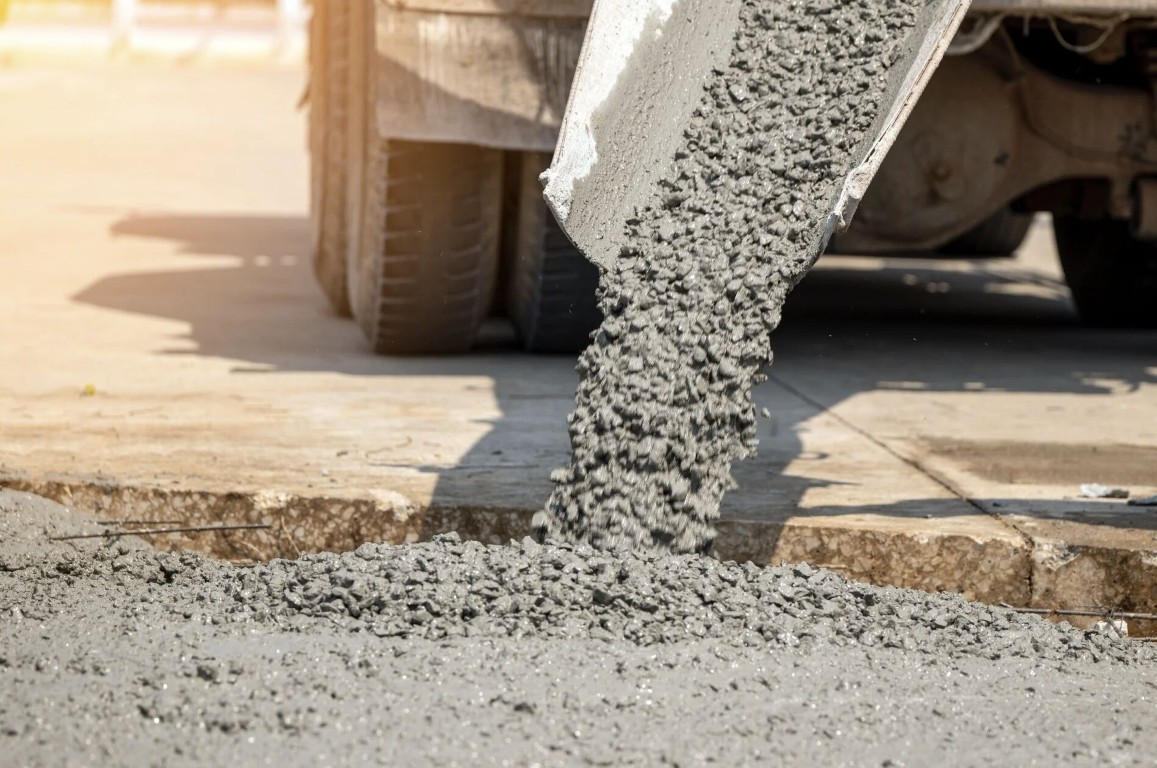
We pour concrete in a continuous operation to avoid cold joints. The mix design meets or exceeds required strength specifications for foundation work. As we place the concrete, we consolidate it to eliminate air pockets and ensure complete filling around reinforcement. This step is crucial for structural integrity.
Finishing and Curing
For exposed slabs like garage floors, we finish the surface to the specified texture. For foundations that will be covered, a basic trowel finish is sufficient. After finishing, we cure the concrete properly to achieve maximum strength and durability. Curing methods depend on weather conditions and project requirements. We take the time to do it right.