Retaining Walls & Concrete Masonry
Structural walls that control erosion, create usable space, and enhance your landscape.
The Purpose and Benefits of Retaining Walls
Retaining walls solve slope and erosion problems while creating functional outdoor spaces. If your property has uneven terrain, a retaining wall can transform unusable hillsides into level areas for patios, gardens, or lawns. These structures hold back soil, prevent erosion, and manage water runoff. When designed and built correctly, retaining walls add both beauty and value to your property.
Many Palm Harbor properties have elevation changes that create landscaping challenges. Soil erosion washes away topsoil and undermines structures. Sloped yards limit how you can use your outdoor space. Retaining walls address these issues by creating stable, level terraces. You gain usable yard space, protect your home from water damage, and create attractive landscape features that define your property.
Common Applications for Retaining Walls
- Slope stabilization: preventing soil erosion and landslides
- Terracing: creating multiple level areas on hillside properties
- Garden beds: raising planting areas and improving drainage
- Driveway support: holding back soil along sloped driveways
- Property boundaries: defining edges and creating separation
- Water management: directing runoff and preventing flooding
We design and build retaining walls throughout Palm Harbor using various materials and construction methods. Every project starts with evaluating your site, understanding soil conditions, and determining the right solution for your needs. Retaining wall design is not guesswork. It requires engineering knowledge and construction experience to create walls that perform properly and last for decades.
Types of Retaining Walls We Build
Different retaining wall systems work better for different situations. We recommend the right type based on wall height, soil conditions, budget, and aesthetic preferences.
Poured Concrete Walls
Poured concrete retaining walls offer maximum strength and durability. We excavate, form, reinforce with rebar, and pour concrete to create solid structures. These walls handle the highest loads and work well for tall installations. The surface can be left natural, painted, or covered with stone veneer. Poured walls require more labor but provide unmatched structural capacity.
Concrete Block Walls
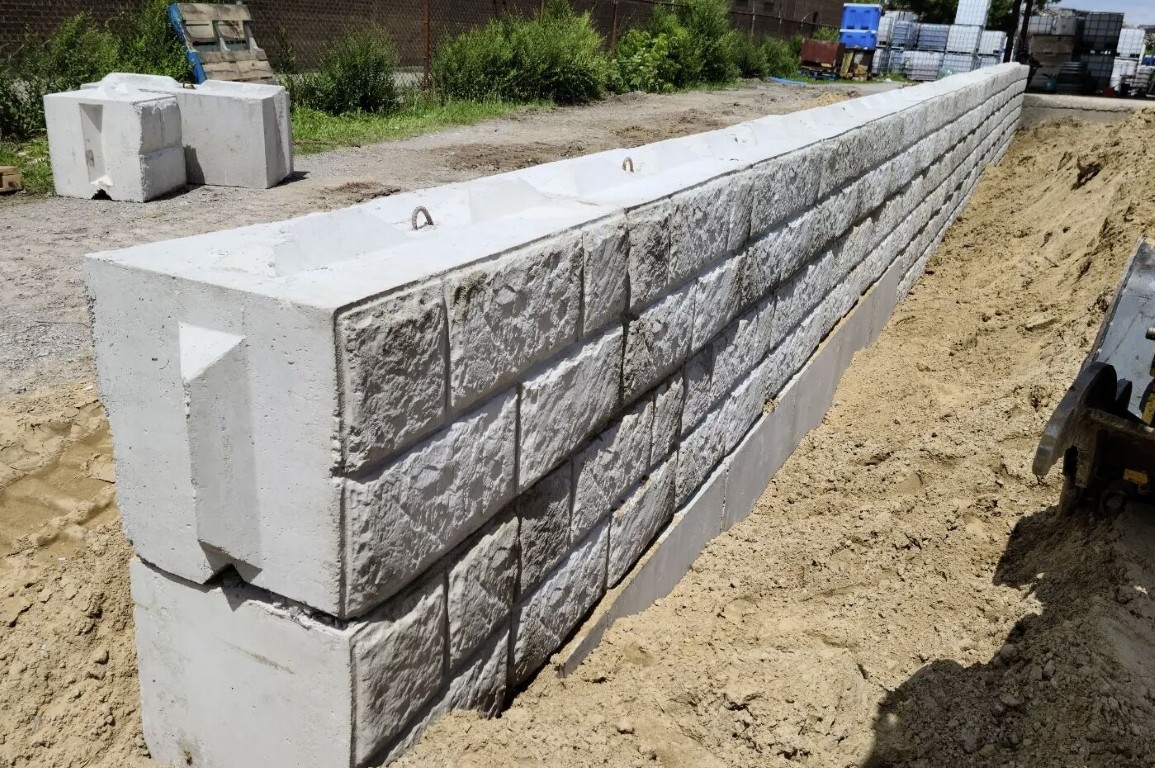
Concrete masonry units allow us to build strong retaining walls with less forming work. We stack and mortar blocks, filling cores with concrete and rebar for reinforcement. Block walls can be faced with decorative stone or brick for improved appearance. This method works well for medium-height walls and provides good value.
Segmental Retaining Wall Blocks
Interlocking concrete blocks create attractive retaining walls without mortar. These systems rely on block weight, mechanical connections, and proper base preparation. They work well for residential applications up to moderate heights. Many styles and colors are available to match your landscape design. Installation is faster than poured concrete walls.
Custom Masonry Work
Beyond retaining walls, we handle all types of concrete masonry projects. This includes decorative block walls, brick veneer, stone work, and outdoor living features. We work with various materials to create custom solutions that match your vision. Our masonry experience ensures quality craftsmanship and lasting results.
Engineering and Construction Considerations
Retaining walls must resist significant forces from soil pressure and water. Poor design or construction leads to wall failure, which creates dangerous conditions and expensive repairs. We take a systematic approach to ensure every wall we build performs as intended.
Site Evaluation and Soil Analysis
We begin by evaluating your site. What type of soil are we retaining? How much height do we need? What is the slope above the wall? Are there water sources that affect drainage? These factors determine what type of wall we recommend and how we design it. Taller walls or challenging soil conditions may require engineering analysis and calculations.
Drainage Systems
Proper drainage is the most critical factor in retaining wall success. Water trapped behind walls creates pressure that causes failure. We install drainage systems including perforated pipes, gravel backfill, and weep holes. These features allow water to escape instead of building up pressure. Every retaining wall we build includes appropriate drainage based on site conditions.
Foundation and Base Preparation
Retaining walls need solid foundations. We excavate below grade, compact the subgrade, and install gravel base material. For taller walls, we pour concrete footings. The foundation must be level and properly sized for the wall height and load. We never cut corners on foundation work because it determines whether your wall stands or fails.
Reinforcement and Structural Elements
Taller walls require reinforcement to handle soil loads. We install rebar in concrete walls and use geogrid reinforcement with block systems. Proper reinforcement placement and spacing follow engineering specifications. We understand structural requirements and build walls that meet or exceed standards. Your wall will be safe, stable, and built to last.